Case ID: 289
Publication date: 05 Jun, 2015
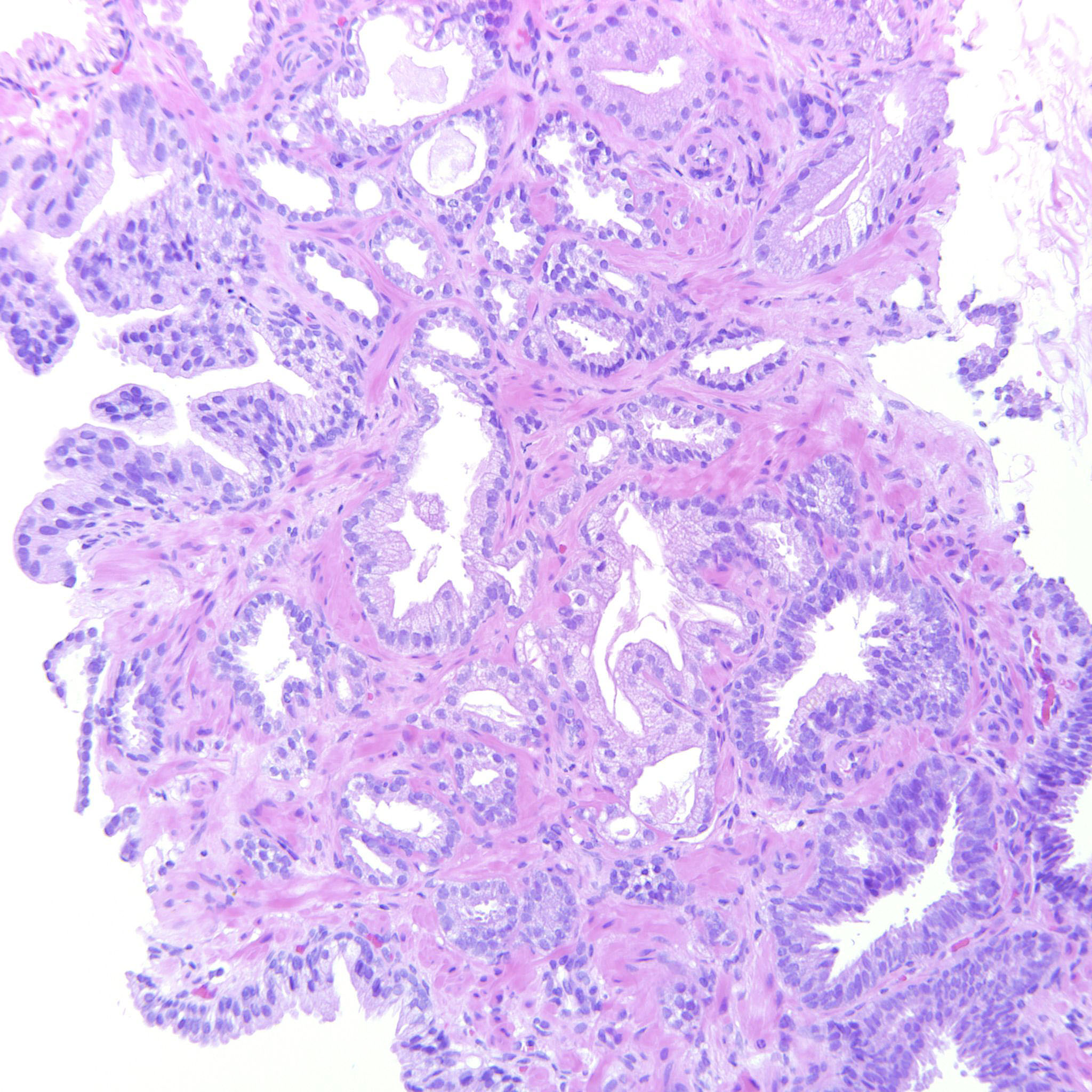
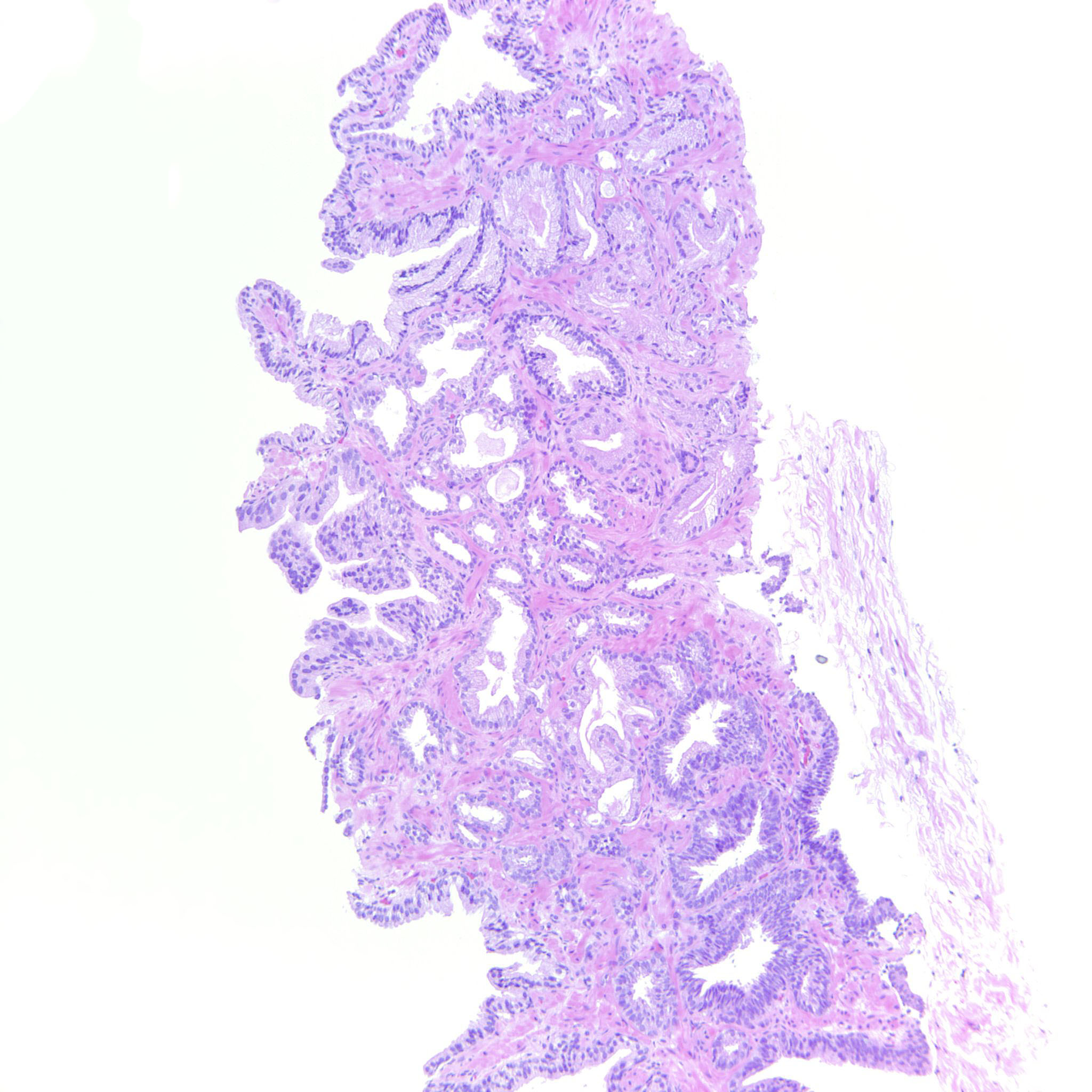
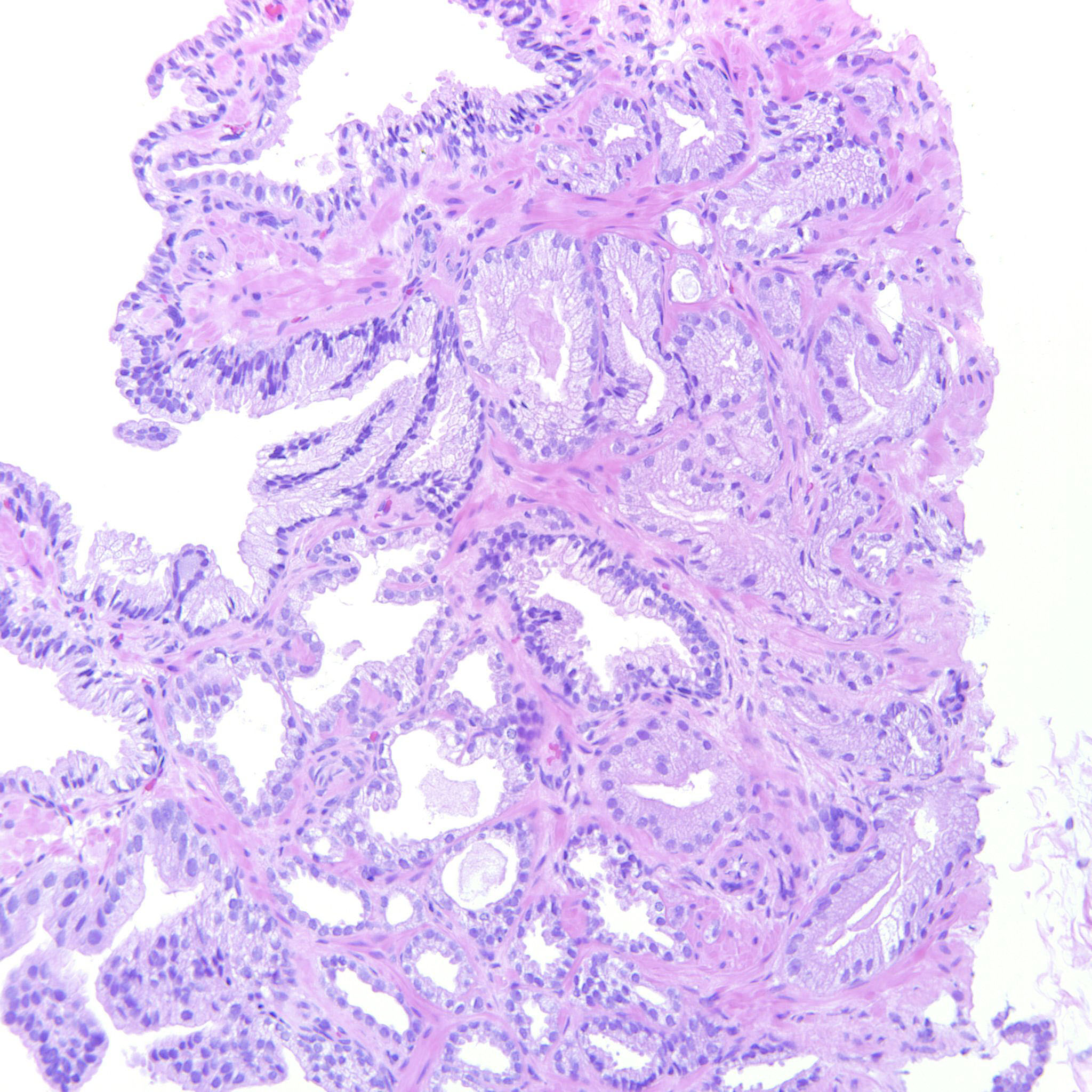
Consensus grade: GS 3+3=6 (ISUP 1)
Show diagnosis by expert panel members| User | Diagnosis | Difficulty | Comment |
|---|---|---|---|
| Pathologist 1 | GS 3+3=6 (ISUP 1) | Borderline lower |
HG - PIN also present |
| Pathologist 2 | GS 3+3=6 (ISUP 1) | Typical | |
| Pathologist 3 | GS 3+3=6 (ISUP 1) | Typical |
lots of well demarcated glands |
| Pathologist 4 | GS 3+3=6 (ISUP 1) | Typical | |
| Pathologist 5 | GS 3+3=6 (ISUP 1) | Typical | |
| Pathologist 6 | GS 3+3=6 (ISUP 1) | Typical | |
| Pathologist 7 | GS 3+3=6 (ISUP 1) | Typical | |
| Pathologist 8 | GS 3+3=6 (ISUP 1) | Typical | |
| Pathologist 9 | GS 3+3=6 (ISUP 1) | Typical | |
| Pathologist 10 | GS 3+3=6 (ISUP 1) | Typical | |
| Pathologist 11 | GS 3+3=6 (ISUP 1) | Typical | |
| Pathologist 12 | GS 3+3=6 (ISUP 1) | Borderline higher | |
| Pathologist 13 | GS 3+3=6 (ISUP 1) | Borderline higher | |
| Pathologist 14 | GS 3+3=6 (ISUP 1) | Typical | |
| Pathologist 15 | GS 3+3=6 (ISUP 1) | Typical | |
| Pathologist 16 | GS 3+3=6 (ISUP 1) | Typical | |
| Pathologist 17 | GS 3+3=6 (ISUP 1) | Borderline lower |
Seems like a straightforward case. I think the few glands without open lumens are tangentially sectioned. |
| Pathologist 18 | GS 3+3=6 (ISUP 1) | Borderline higher |
single separate glands. Focally, hard to see if early cribriform or psudohyperplastic glands. |
| Pathologist 19 | GS 3+3=6 (ISUP 1) | Typical | |
| Pathologist 20 | GS 3+3=6 (ISUP 1) | Typical | |
| Pathologist 21 | GS 3+3=6 (ISUP 1) | Typical | |
| Pathologist 22 | GS 3+3=6 (ISUP 1) | Typical | |
| Pathologist 23 | GS 3+3=6 (ISUP 1) | Typical | |
| Pathologist 24 | GS 3+4=7 (ISUP 2) | Borderline lower | |
| Pathologist 25 | GS 3+3=6 (ISUP 1) | Typical |
Case description (by case creator):
Classical 336. Some glands may be diffcult to recognize as malignant.