Case ID: 275
Publication date: 05 Jun, 2015
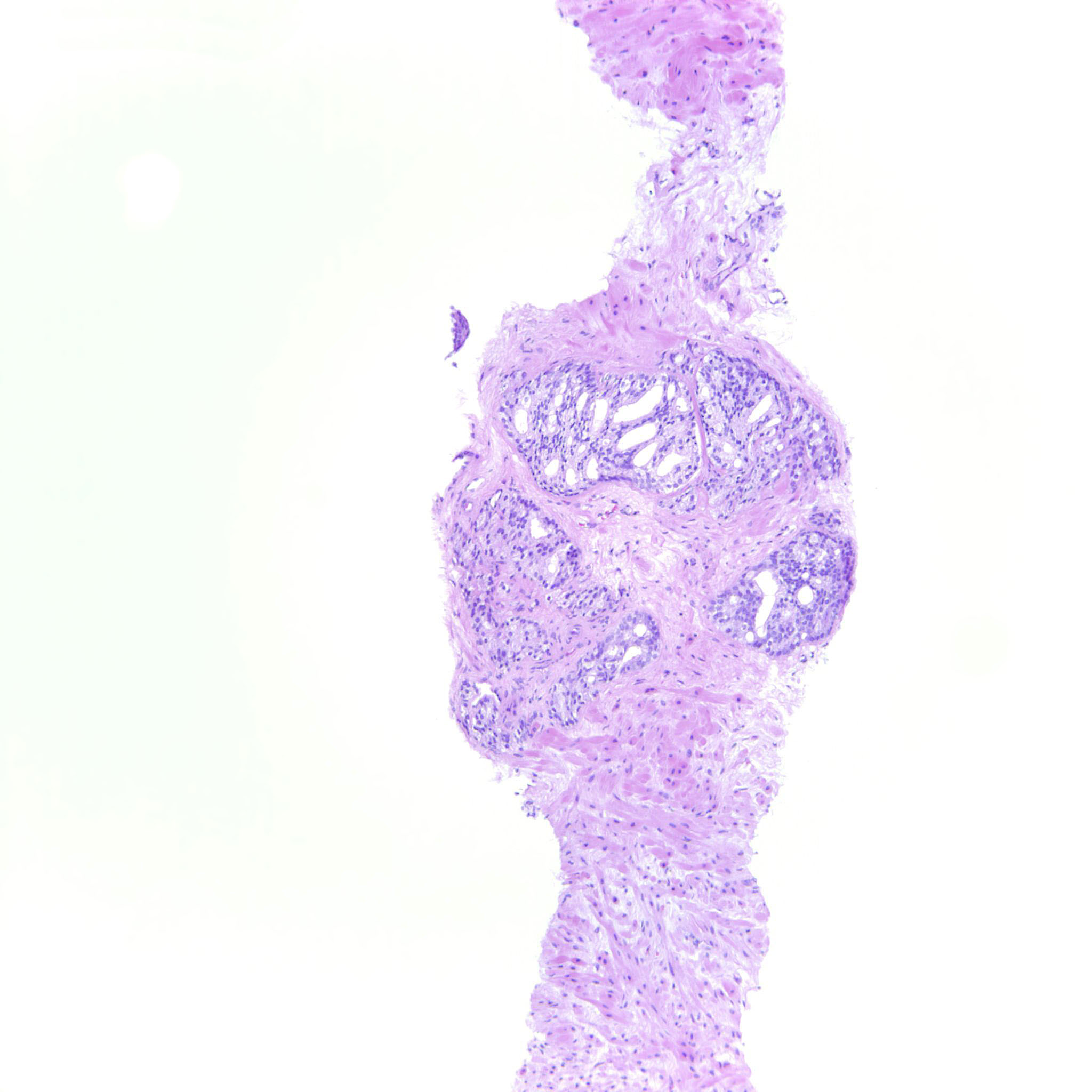
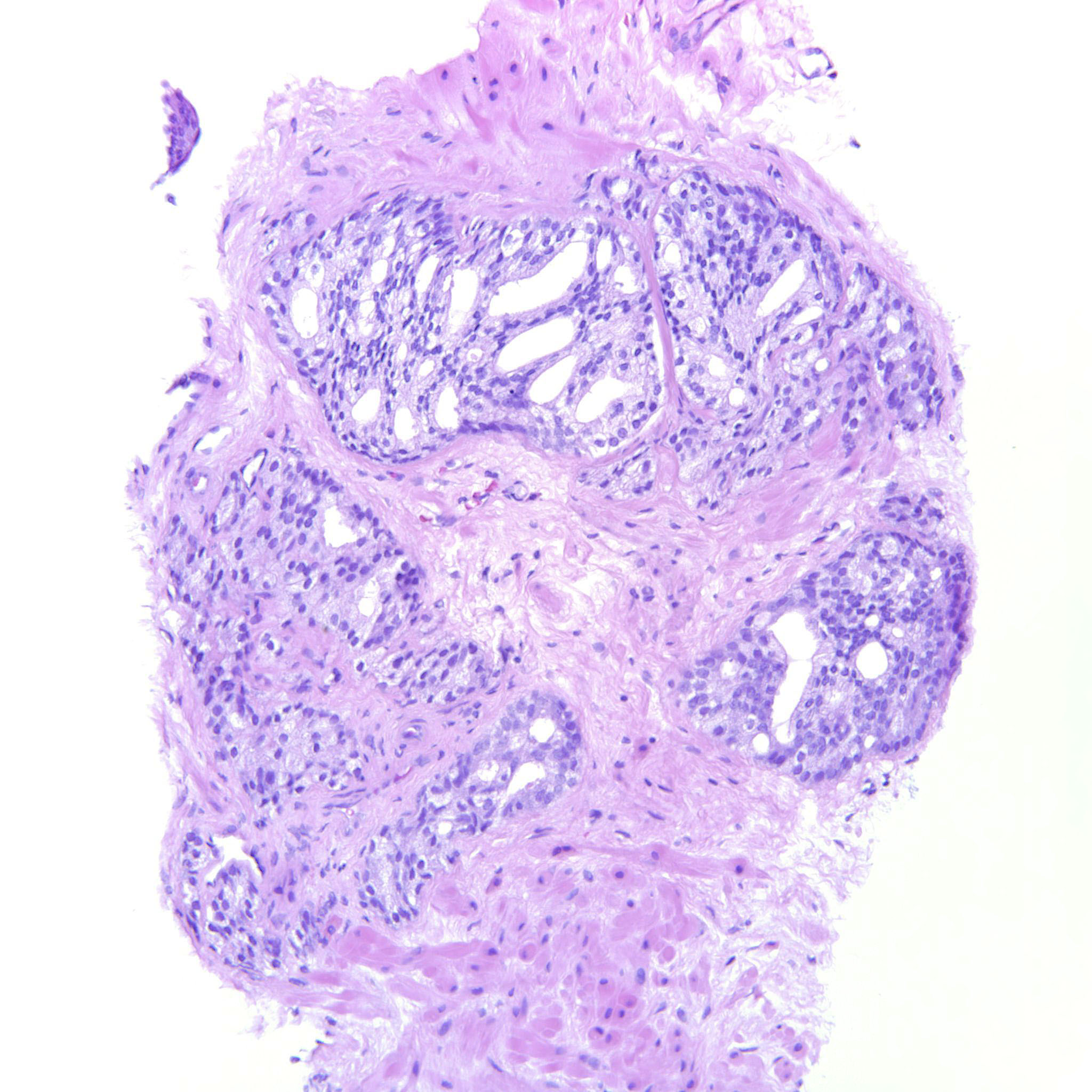
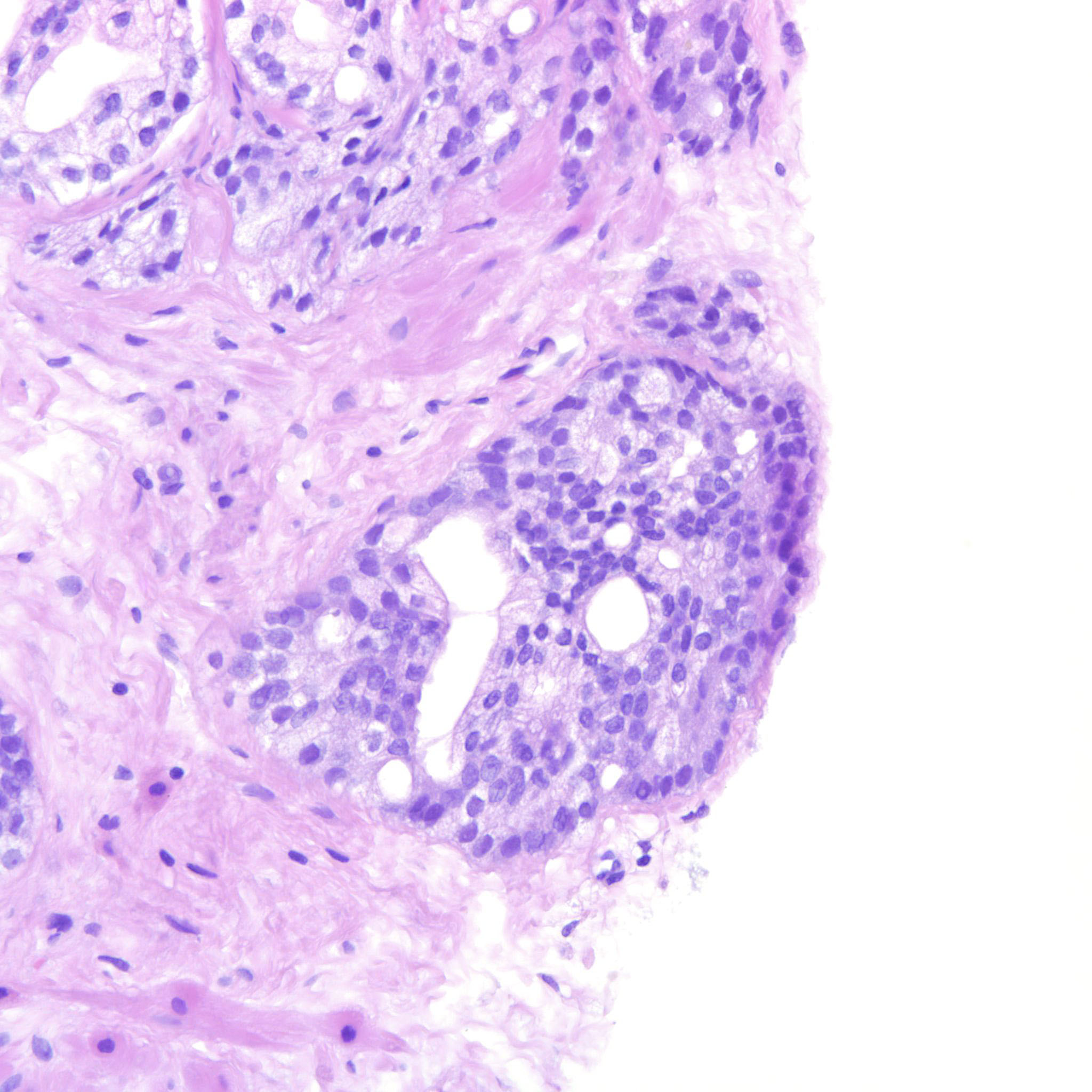
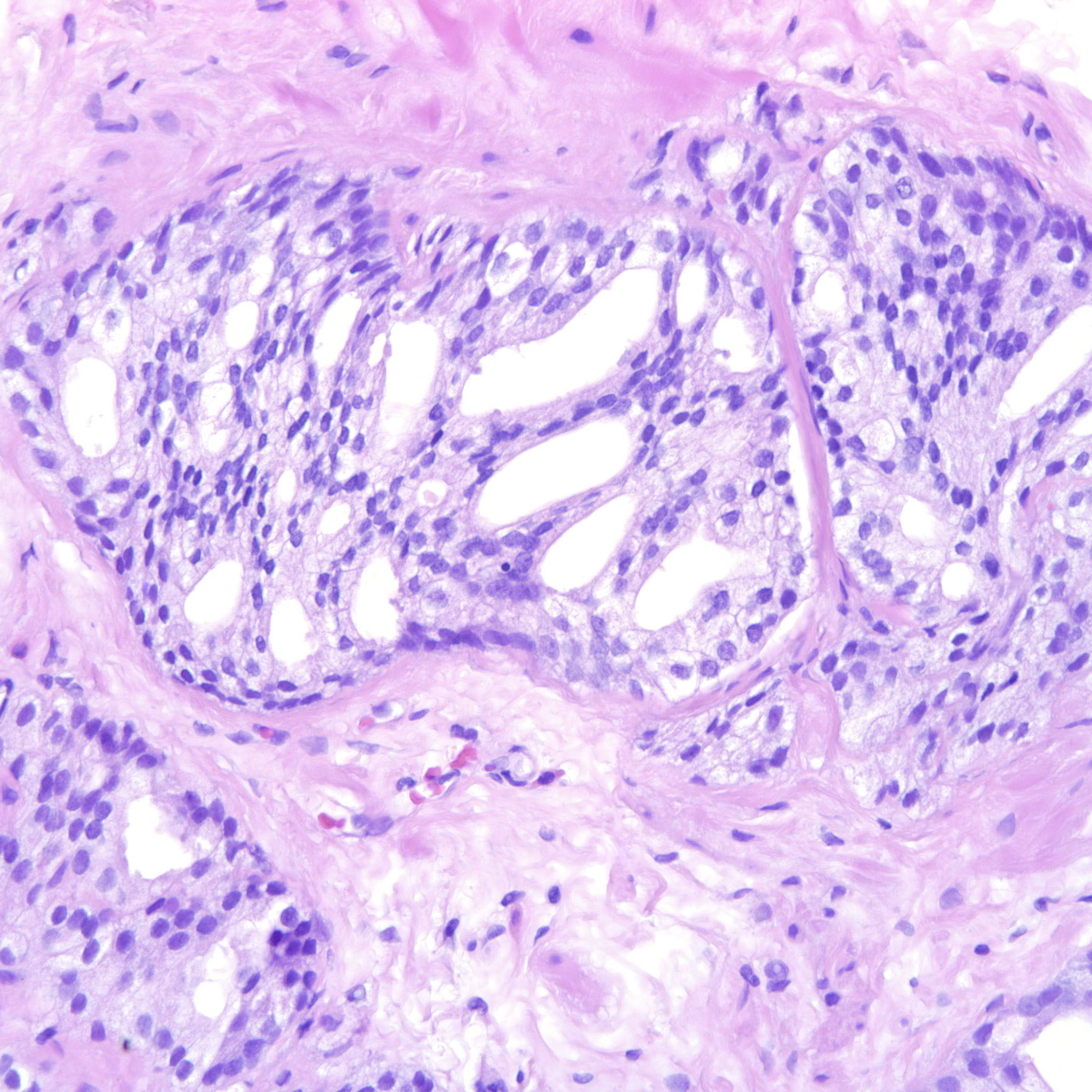
Consensus grade: GS 4+4=8 (ISUP 4)
Show diagnosis by expert panel members| User | Diagnosis | Difficulty | Comment |
|---|---|---|---|
| Pathologist 1 | GS 4+4=8 (ISUP 4) | Typical |
Cribriform |
| Pathologist 2 | GS 4+4=8 (ISUP 4) | Typical | |
| Pathologist 3 | GS 4+4=8 (ISUP 4) | Typical | |
| Pathologist 4 | GS 4+4=8 (ISUP 4) | Typical |
8 although nuclear atypia is not very high, but these cribriform cases rarely display important atypia |
| Pathologist 5 | GS 4+4=8 (ISUP 4) | Typical | |
| Pathologist 6 | GS 4+3=7 (ISUP 3) | Borderline higher | |
| Pathologist 7 | GS 4+4=8 (ISUP 4) | Typical | |
| Pathologist 8 | GS 4+4=8 (ISUP 4) | Typical | |
| Pathologist 9 | GS 4+4=8 (ISUP 4) | Typical | |
| Pathologist 10 | GS 4+4=8 (ISUP 4) | Typical | |
| Pathologist 11 | GS 4+4=8 (ISUP 4) | Typical | |
| Pathologist 12 | GS 4+4=8 (ISUP 4) | Typical |
IDC? |
| Pathologist 13 | GS 4+4=8 (ISUP 4) | Typical | |
| Pathologist 14 | GS 4+3=7 (ISUP 3) | Borderline higher |
a few 3 glands but >5% since whole tumor is tiny |
| Pathologist 15 | GS 4+4=8 (ISUP 4) | Typical | |
| Pathologist 16 | GS 4+4=8 (ISUP 4) | Borderline lower |
Straightforward case. |
| Pathologist 17 | GS 4+4=8 (ISUP 4) | Typical |
All cribriform glands |
| Pathologist 18 | GS 4+4=8 (ISUP 4) | Borderline lower |
or is this all intraductal!! |
| Pathologist 19 | GS 4+4=8 (ISUP 4) | Typical | |
| Pathologist 20 | GS 4+4=8 (ISUP 4) | Typical | |
| Pathologist 21 | GS 4+4=8 (ISUP 4) | Typical | |
| Pathologist 22 | GS 4+4=8 (ISUP 4) | Typical | |
| Pathologist 23 | GS 4+4=8 (ISUP 4) | Typical | |
| Pathologist 24 | GS 4+4=8 (ISUP 4) | Typical |
Case description (by case creator):
Most of the glands in this 448 are cribriform but some are fused. As always it is difficult to know if some of the cribriform glands may be IDC but there is no doubt that there is an invasive component of GP4 here anyway.