Case ID: 1266
Publication date: 05 Feb, 2016
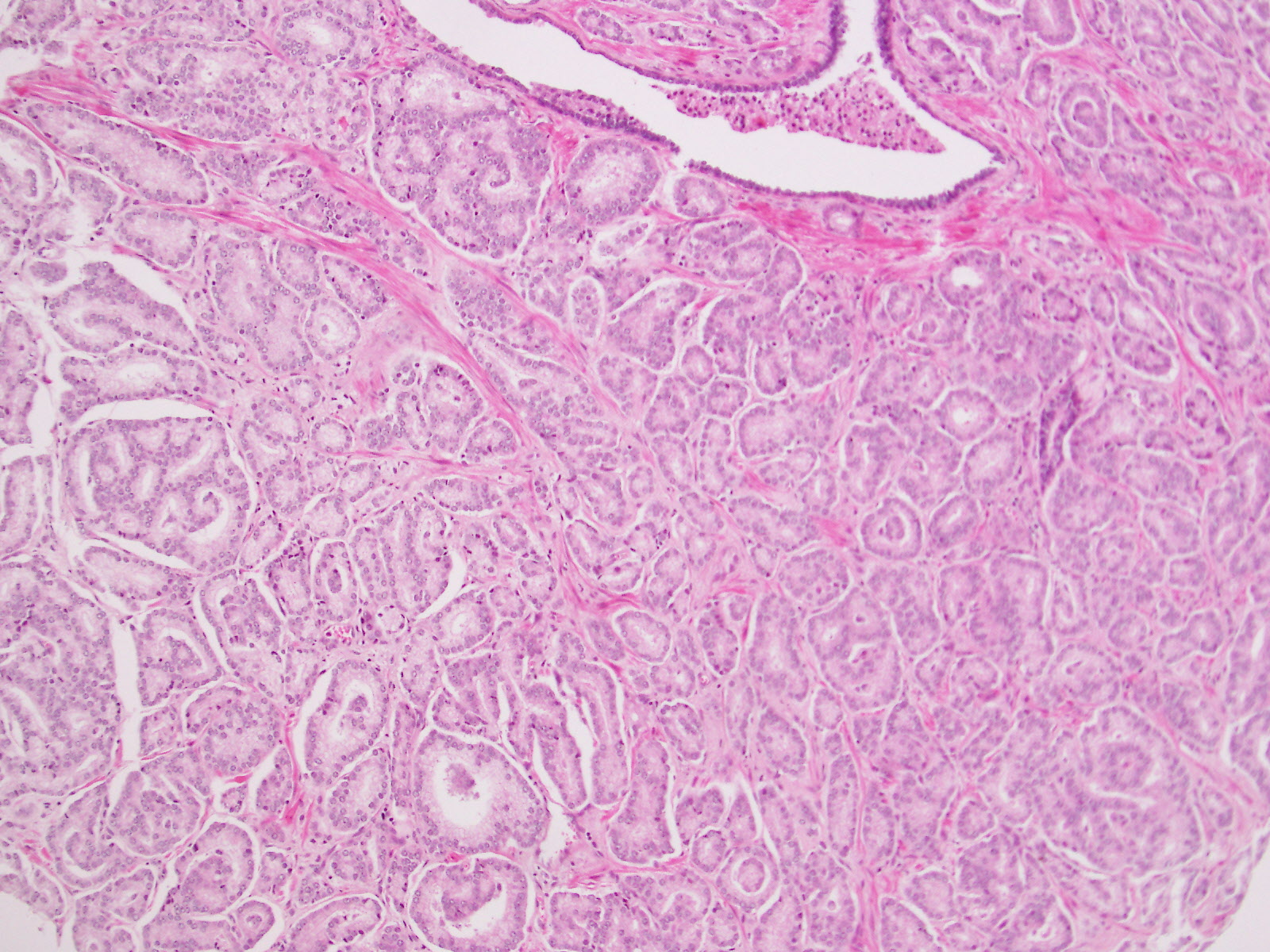
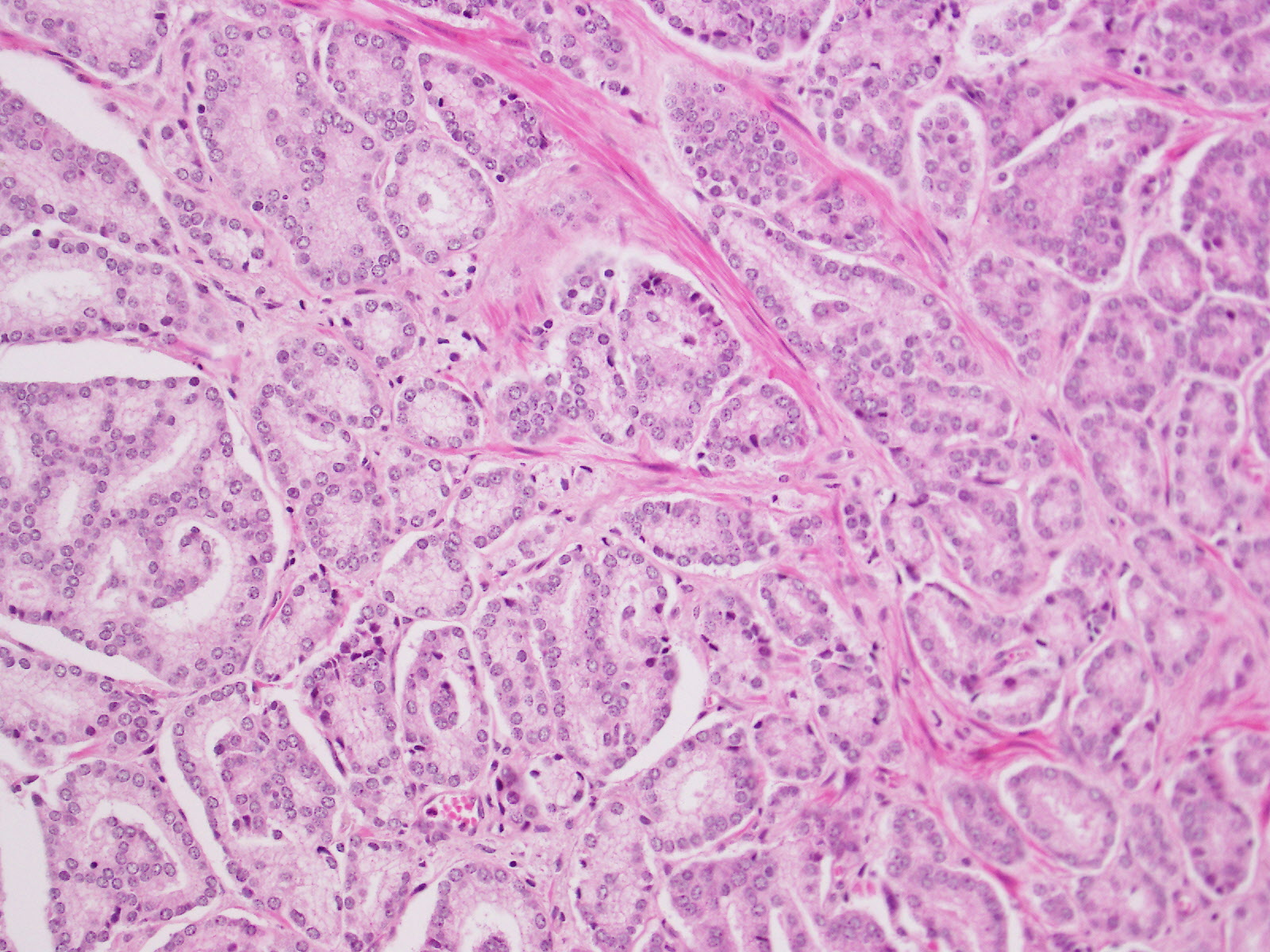
Consensus grade: GS 3+4=7 (ISUP 2)
Show diagnosis by expert panel members| User | Diagnosis | Difficulty | Comment |
|---|---|---|---|
| Pathologist 1 | GS 4+3=7 (ISUP 3) | Typical | |
| Pathologist 2 | GS 3+4=7 (ISUP 2) | Typical | |
| Pathologist 3 | GS 4+3=7 (ISUP 3) | Typical |
equal amount of 3 and 4. I pick 437 |
| Pathologist 4 | GS 3+4=7 (ISUP 2) | Typical | |
| Pathologist 5 | GS 3+4=7 (ISUP 2) | Typical | |
| Pathologist 6 | GS 3+4=7 (ISUP 2) | Borderline higher |
Between ISUP 2 and 3 |
| Pathologist 7 | GS 3+4=7 (ISUP 2) | Typical | |
| Pathologist 8 | GS 3+4=7 (ISUP 2) | Typical | |
| Pathologist 9 | GS 3+4=7 (ISUP 2) | Borderline higher | |
| Pathologist 10 | GS 3+4=7 (ISUP 2) | Borderline lower | |
| Pathologist 11 | GS 3+4=7 (ISUP 2) | Typical | |
| Pathologist 12 | GS 4+3=7 (ISUP 3) | Typical | |
| Pathologist 13 | GS 3+4=7 (ISUP 2) | Typical | |
| Pathologist 14 | GS 3+4=7 (ISUP 2) | Borderline higher |
Barely enough G4 to reach G3+4. Some of the cribriform pattern here is G3, but some is also G4. |
| Pathologist 15 | GS 3+4=7 (ISUP 2) | Typical | |
| Pathologist 16 | GS 3+4=7 (ISUP 2) | Borderline higher | |
| Pathologist 17 | GS 3+4=7 (ISUP 2) | Typical | |
| Pathologist 18 | GS 3+4=7 (ISUP 2) | Typical | |
| Pathologist 19 | GS 3+4=7 (ISUP 2) | Typical | |
| Pathologist 20 | GS 3+4=7 (ISUP 2) | Typical |
Mostly separate glands, Grade 3, but with focal "small cribriform" formation that should be graded as Grade 4. |
| Pathologist 21 | GS 3+4=7 (ISUP 2) | Typical | |
| Pathologist 22 | GS 3+4=7 (ISUP 2) | Typical | |
| Pathologist 23 | GS 4+3=7 (ISUP 3) | Typical |
Case description (by case creator):