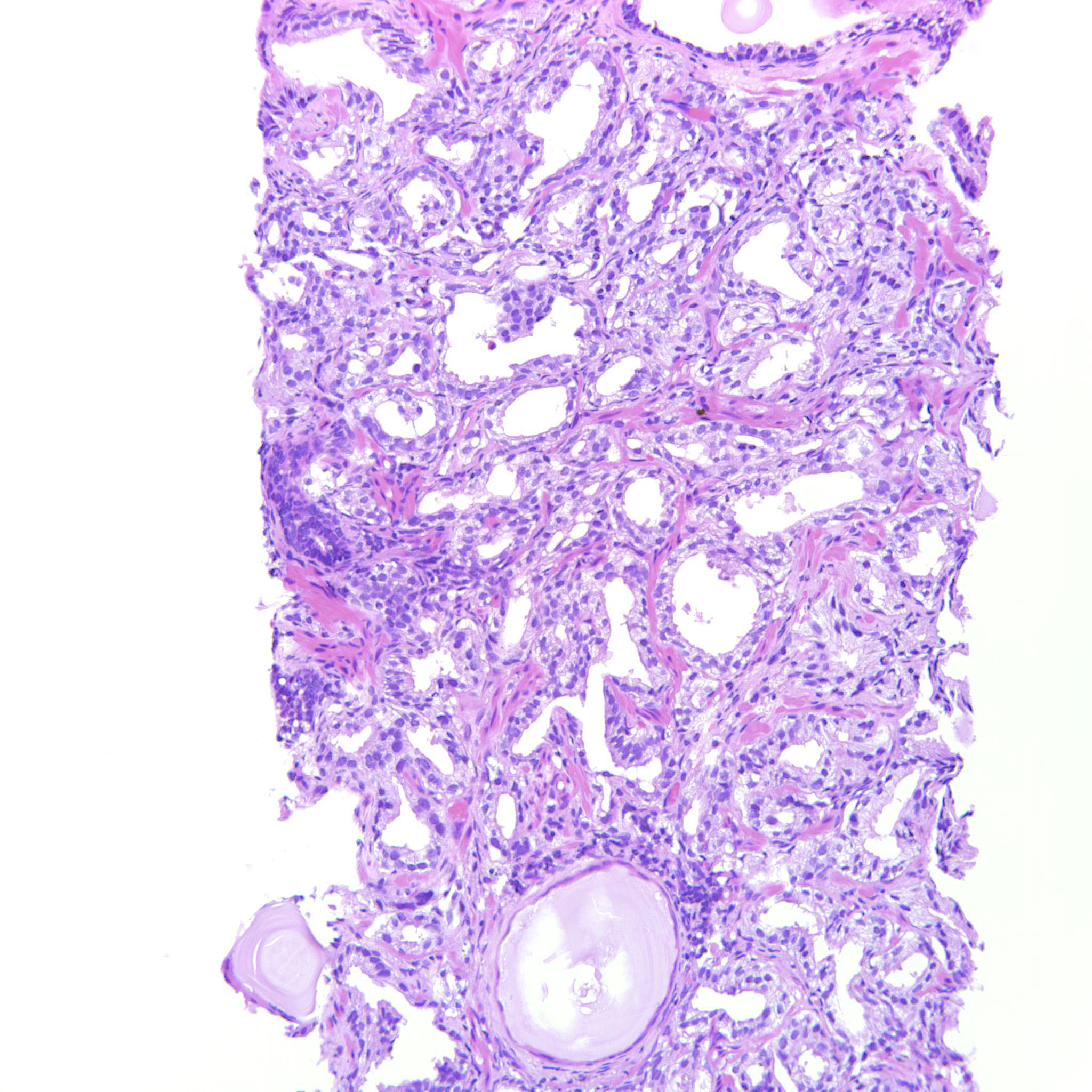
Case ID: 322
Publication date: 05 Jun, 2015
Consensus grade: GS 3+4=7 (ISUP 2)
Show diagnosis by expert panel members| User | Diagnosis | Difficulty | Comment |
|---|---|---|---|
| Pathologist 1 | GS 3+4=7 (ISUP 2) | Typical | |
| Pathologist 2 | GS 3+4=7 (ISUP 2) | Typical | |
| Pathologist 3 | GS 3+4=7 (ISUP 2) | Typical | |
| Pathologist 4 | GS 3+4=7 (ISUP 2) | Borderline lower | |
| Pathologist 5 | GS 3+4=7 (ISUP 2) | Borderline higher | |
| Pathologist 6 | GS 3+4=7 (ISUP 2) | Typical |
some glomerulation, some badly confluent glands, nuclear atypia moderate |
| Pathologist 7 | GS 3+4=7 (ISUP 2) | Borderline lower |
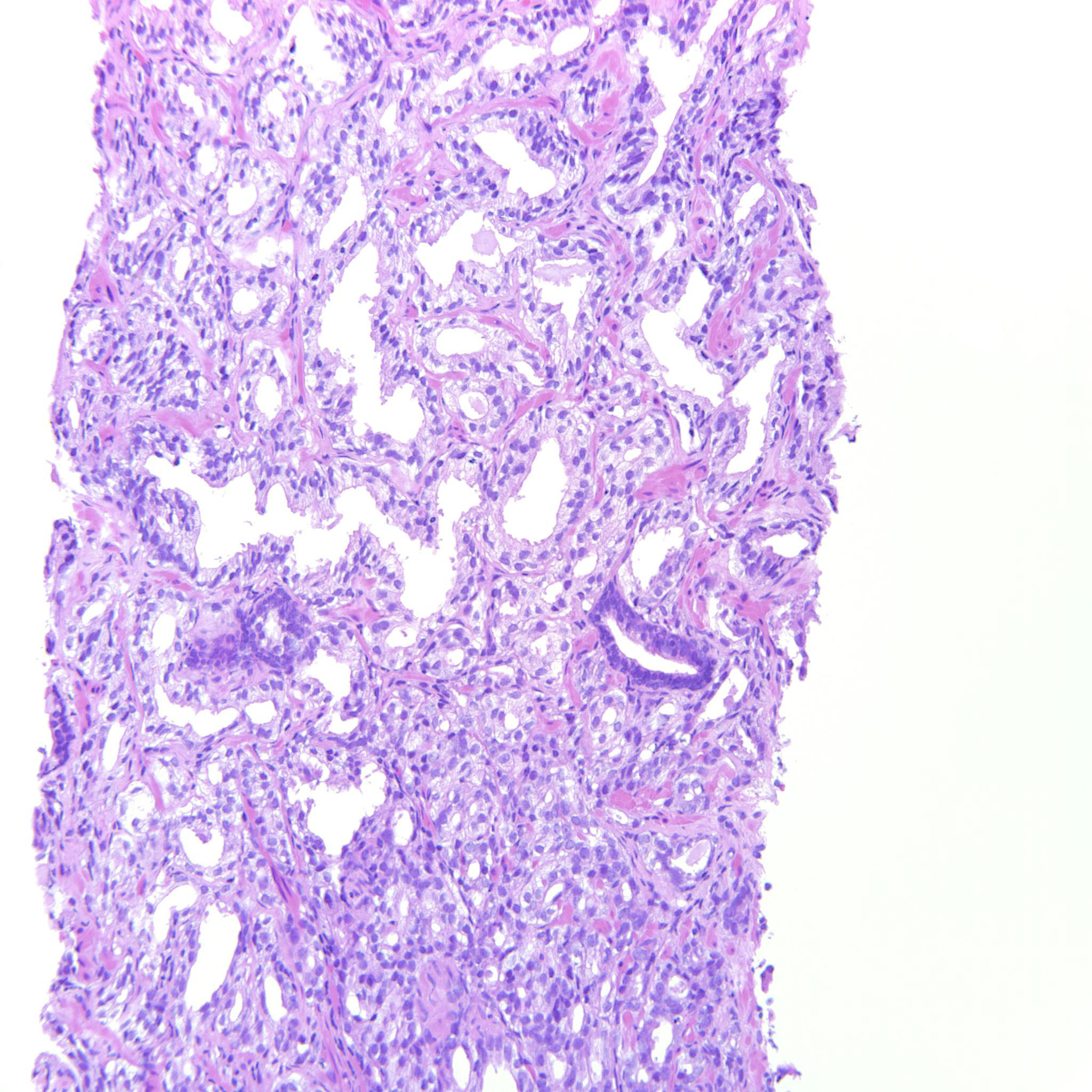
Hard to tell if there are fused glands or not (bottom of third image) |
| Pathologist 8 | GS 3+4=7 (ISUP 2) | Borderline higher | |
| Pathologist 9 | GS 3+4=7 (ISUP 2) | Typical | |
| Pathologist 10 | GS 4+3=7 (ISUP 3) | Borderline lower | |
| Pathologist 11 | GS 4+3=7 (ISUP 3) | Borderline lower |
Difficult to assess proportion of G3 vs G4 |
| Pathologist 12 | GS 3+4=7 (ISUP 2) | Borderline higher | |
| Pathologist 13 | GS 3+4=7 (ISUP 2) | Typical | |
| Pathologist 14 | GS 3+4=7 (ISUP 2) | Typical | |
| Pathologist 15 | GS 3+4=7 (ISUP 2) | Borderline lower |
Well formed glands and fused glands. |
| Pathologist 16 | GS 3+4=7 (ISUP 2) | Typical | |
| Pathologist 17 | GS 3+4=7 (ISUP 2) | Borderline higher | |
| Pathologist 18 | GS 3+4=7 (ISUP 2) | Borderline higher | |
| Pathologist 19 | GS 4+3=7 (ISUP 3) | Borderline higher |
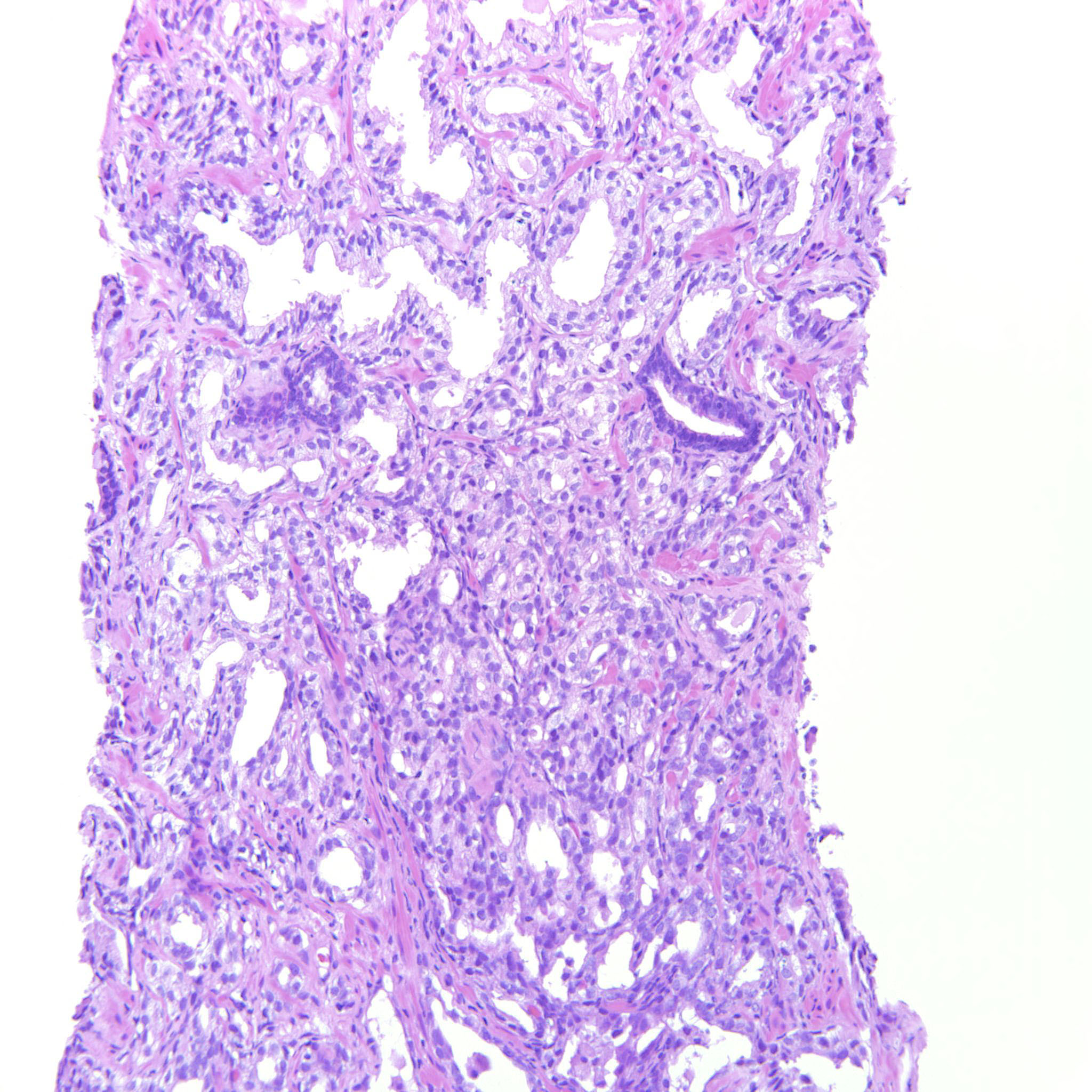
90-95% pattern 4. It can be hard to estimate percentages when the images have overlapping areas - have to do some mental subtraction. |
| Pathologist 20 | GS 3+4=7 (ISUP 2) | Borderline higher | |
| Pathologist 21 | GS 3+4=7 (ISUP 2) | Typical | |
| Pathologist 22 | GS 3+4=7 (ISUP 2) | Borderline higher | |
| Pathologist 23 | GS 4+3=7 (ISUP 3) | Typical | |
| Pathologist 24 | GS 3+4=7 (ISUP 2) | Typical |
Case description (by case creator):
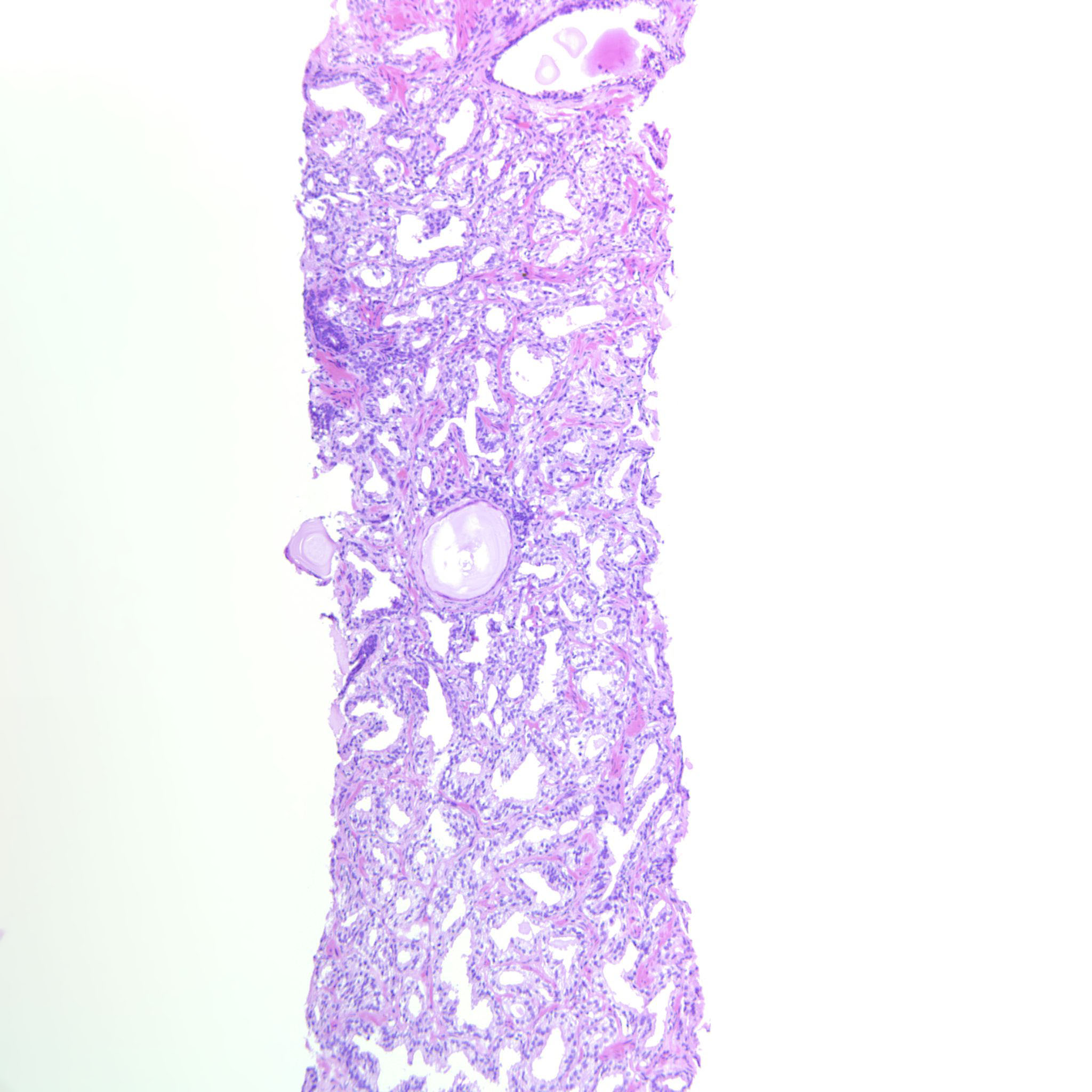
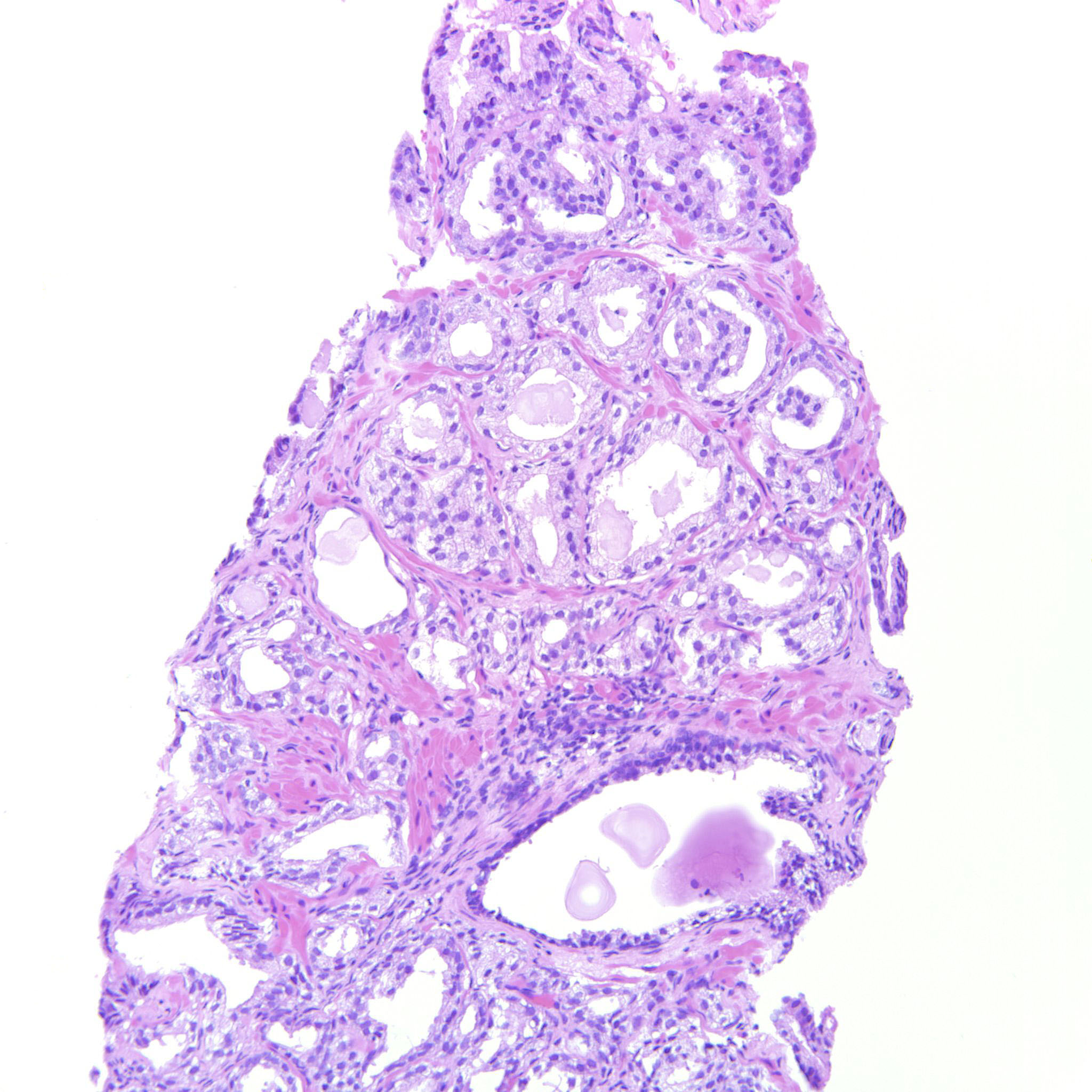
Glandular fusion makes GP4.