Case ID: 306
Publication date: 05 Jun, 2015
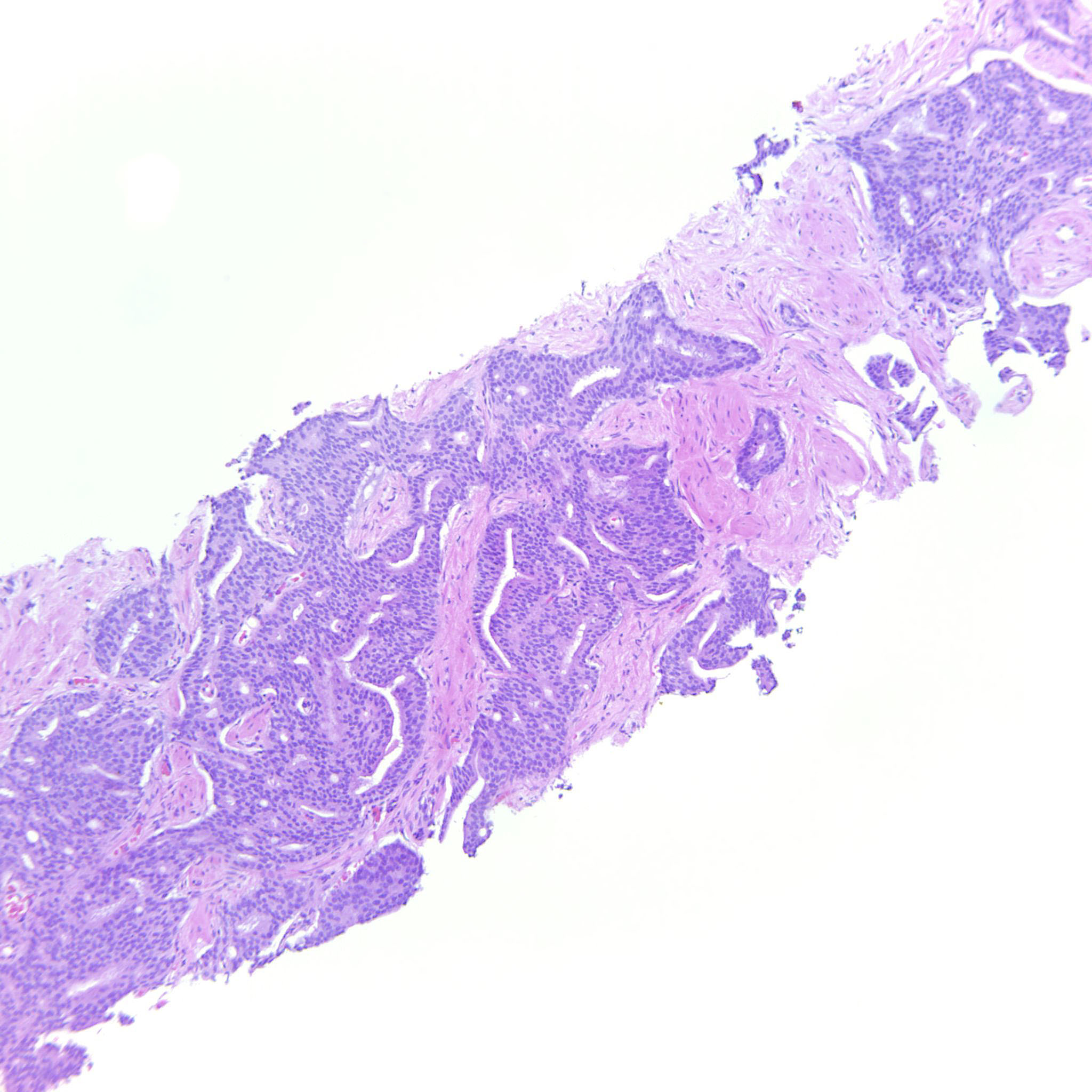
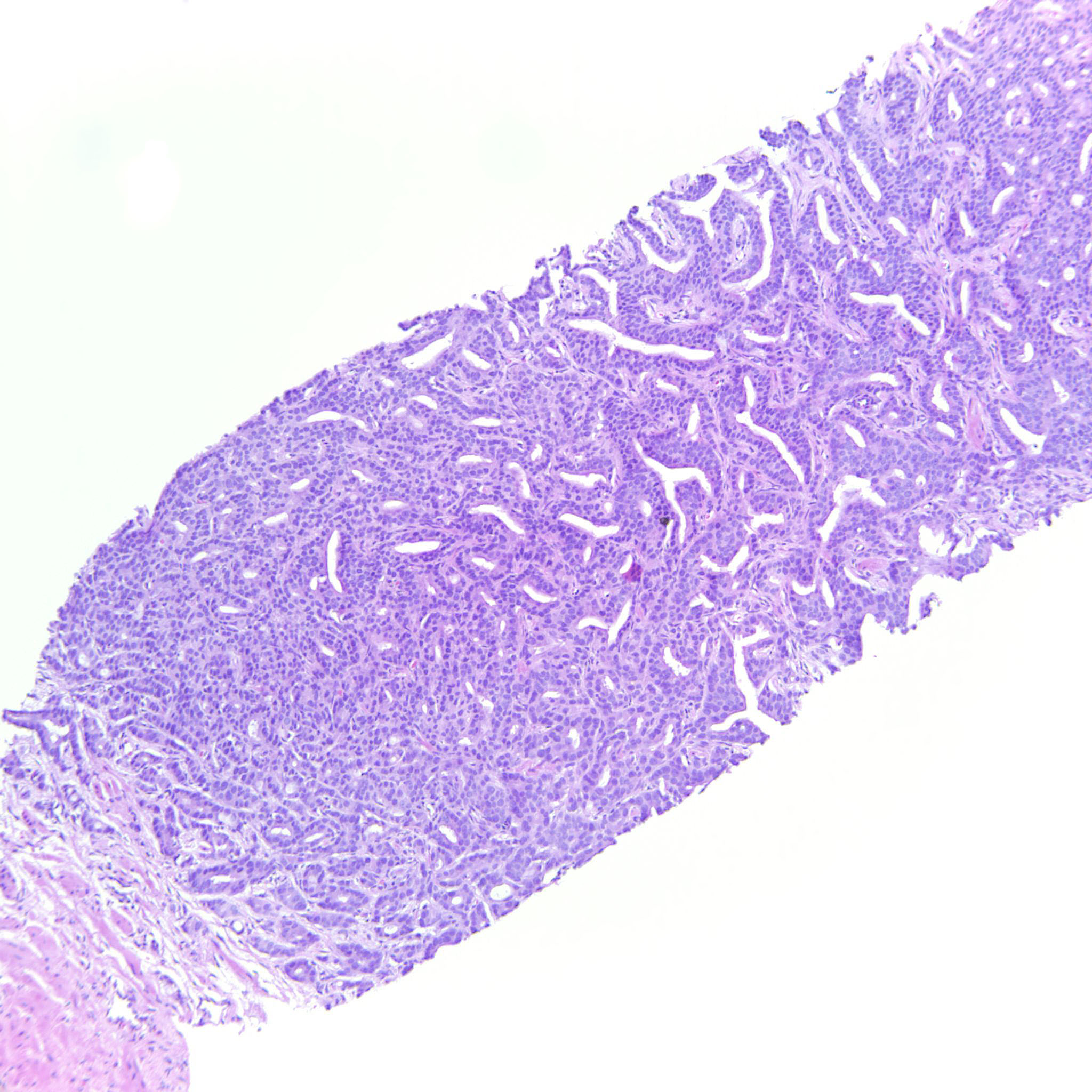
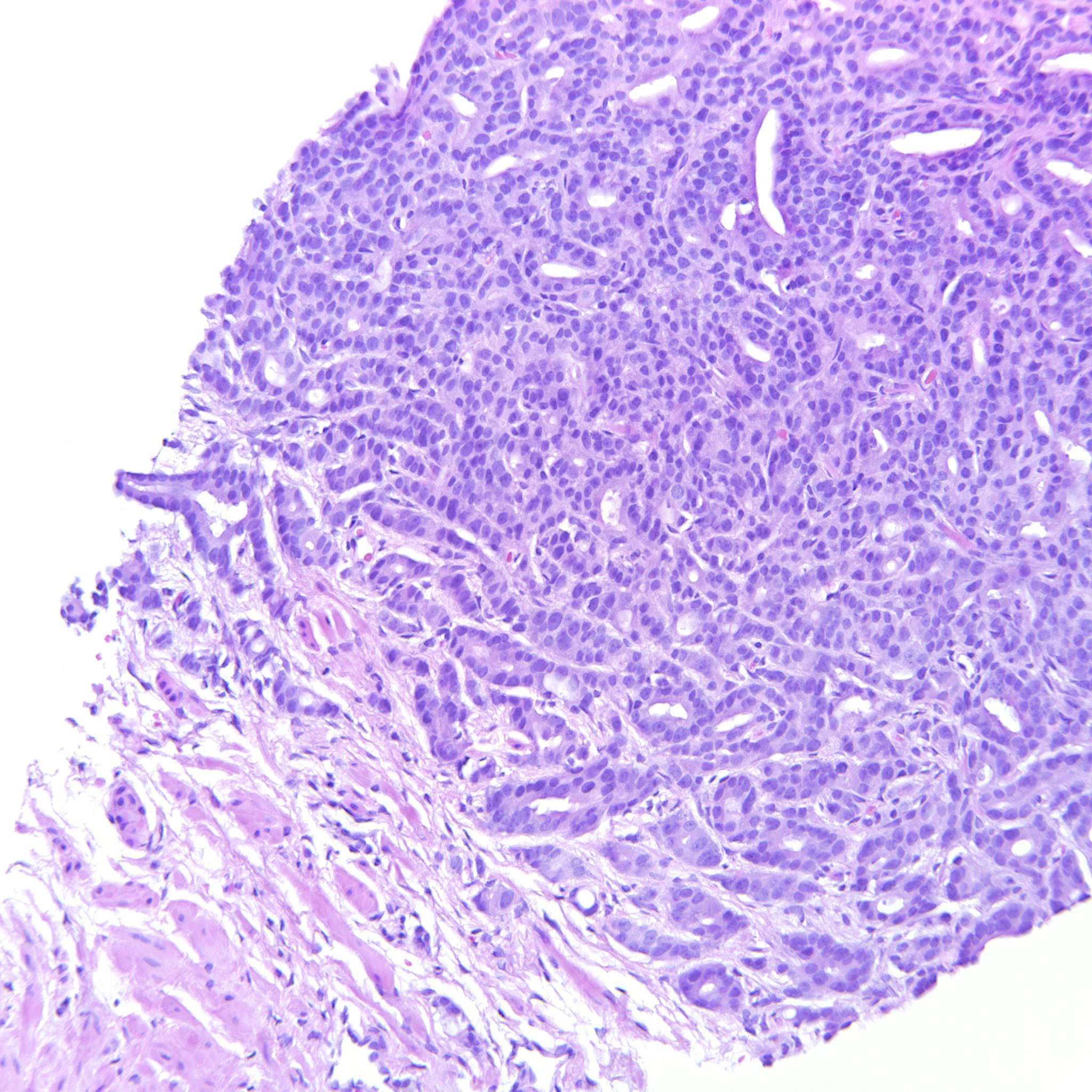
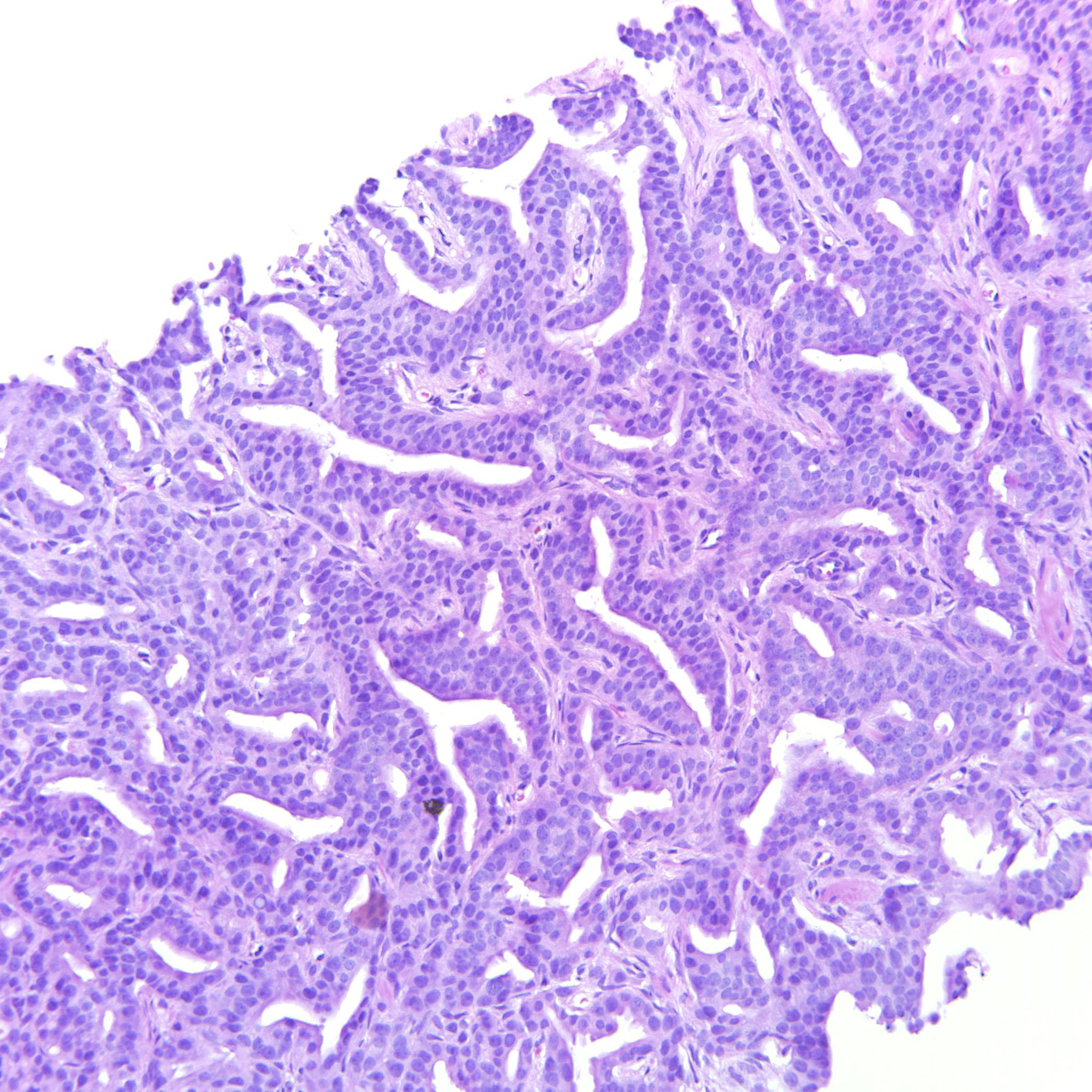
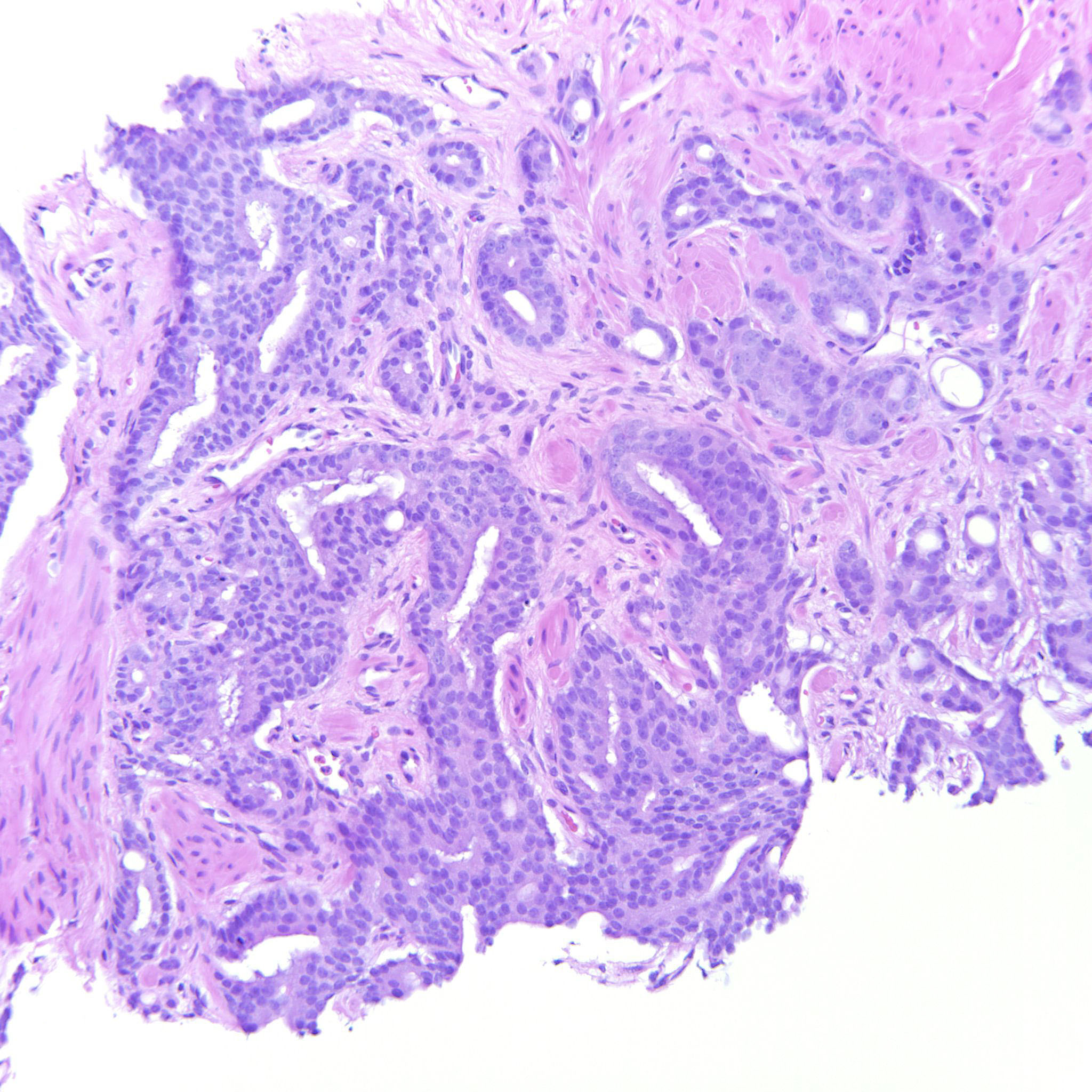
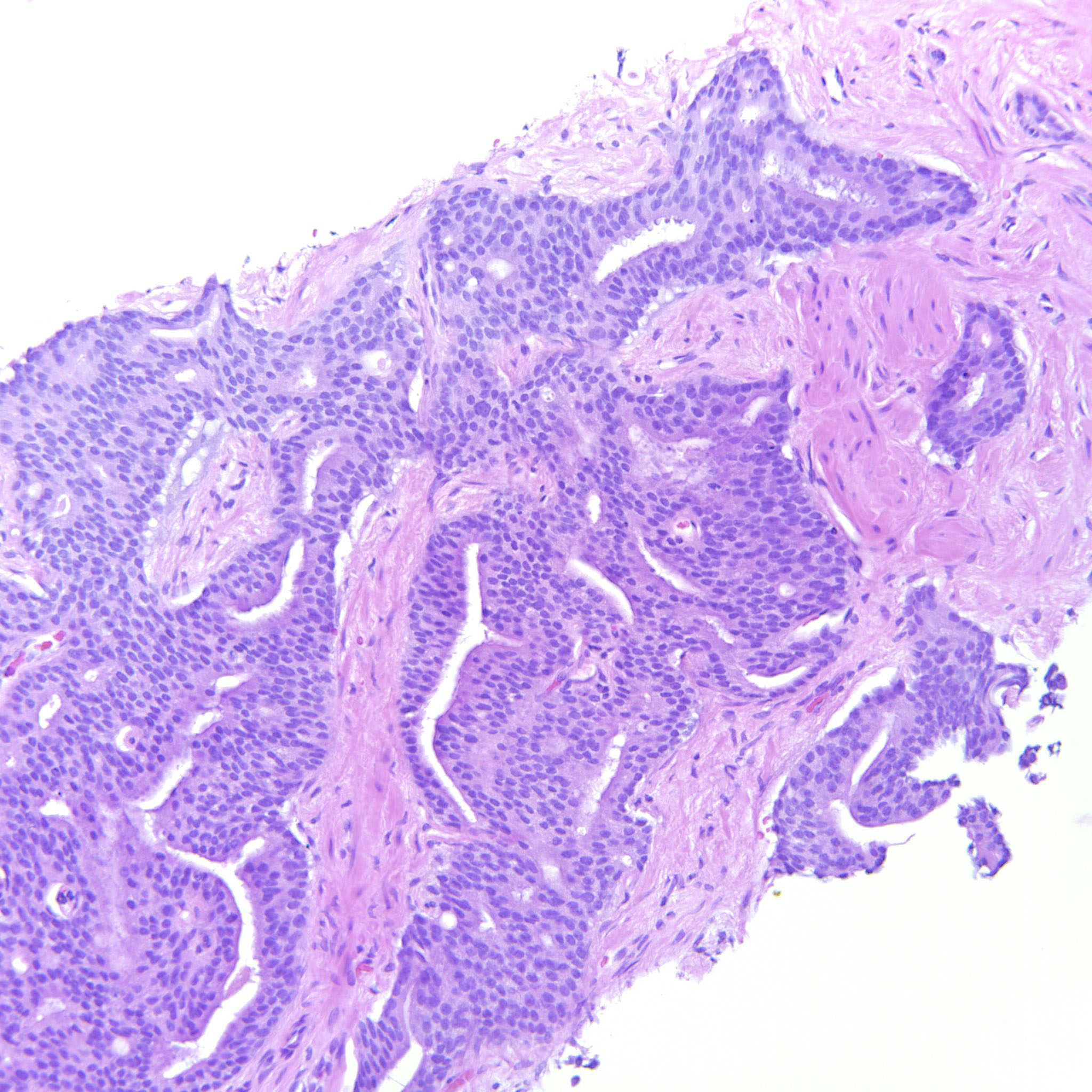
Consensus grade: GS 4+4=8 (ISUP 4)
Show diagnosis by expert panel members| User | Diagnosis | Difficulty | Comment |
|---|---|---|---|
| Pathologist 1 | GS 4+4=8 (ISUP 4) | Borderline higher |
Almost 4+5 |
| Pathologist 2 | GS 4+4=8 (ISUP 4) | Typical |
Minor component of pattern 3 which I ignored. |
| Pathologist 3 | GS 4+4=8 (ISUP 4) | Typical |
Favor ductal subtype |
| Pathologist 4 | GS 4+3=7 (ISUP 3) | Borderline lower |
Some of the cribriform glands have possible basal cells ie. ?intraductal |
| Pathologist 5 | GS 4+4=8 (ISUP 4) | Borderline higher |
Couple of glands of 3 are ignored due to overwhelming pattern 4 |
| Pathologist 6 | GS 4+3=7 (ISUP 3) | Borderline lower |
stil some 3 in my opinion, there might also be some IDC, but 4 ist predominant |
| Pathologist 7 | GS 4+4=8 (ISUP 4) | Typical | |
| Pathologist 8 | GS 4+3=7 (ISUP 3) | Typical |
Glad there is no basal cell marker |
| Pathologist 9 | GS 4+4=8 (ISUP 4) | Typical | |
| Pathologist 10 | GS 4+4=8 (ISUP 4) | Borderline higher | |
| Pathologist 11 | GS 4+4=8 (ISUP 4) | Borderline higher | |
| Pathologist 12 | GS 4+4=8 (ISUP 4) | Typical | |
| Pathologist 13 | GS 4+4=8 (ISUP 4) | Borderline higher | |
| Pathologist 14 | GS 4+3=7 (ISUP 3) | Typical | |
| Pathologist 15 | GS 4+3=7 (ISUP 3) | Typical | |
| Pathologist 16 | GS 4+4=8 (ISUP 4) | Typical |
Cribriform and fused glands. single glands <5% |
| Pathologist 17 | GS 4+3=7 (ISUP 3) | Typical | |
| Pathologist 18 | GS 4+4=8 (ISUP 4) | Typical | |
| Pathologist 19 | GS 4+4=8 (ISUP 4) | Typical |
I don't think there are enough single, well formed glands for a secondary pattern 3 - also some of them probably represent outpouchings of the fused glands sectioned tangentially. |
| Pathologist 20 | GS 4+4=8 (ISUP 4) | Typical | |
| Pathologist 21 | GS 4+4=8 (ISUP 4) | Typical | |
| Pathologist 22 | GS 4+4=8 (ISUP 4) | Typical | |
| Pathologist 23 | GS 4+4=8 (ISUP 4) | Typical | |
| Pathologist 24 | GS 4+4=8 (ISUP 4) | Typical |
Case description (by case creator):
The tumor is dominated of cribriform cancer. There are a few well formed glands but they are less than 5% of the tumor and can be overlooked which makes this a case of 448.